
SIT-HSE
In orbit NORAD 61763 PGYI-7132-9309-6598-0525 Спутникс Russia

Time in UTC
12:55
Next pass · МАН РС(Я) ГЕОСКАН УКВ · 27°
—
No observations scheduled
26
Observations over 30 days
35%
Successful observations
4k
Frames, latest 2026-10-11 06:38 UTC
The satellite is in orbit
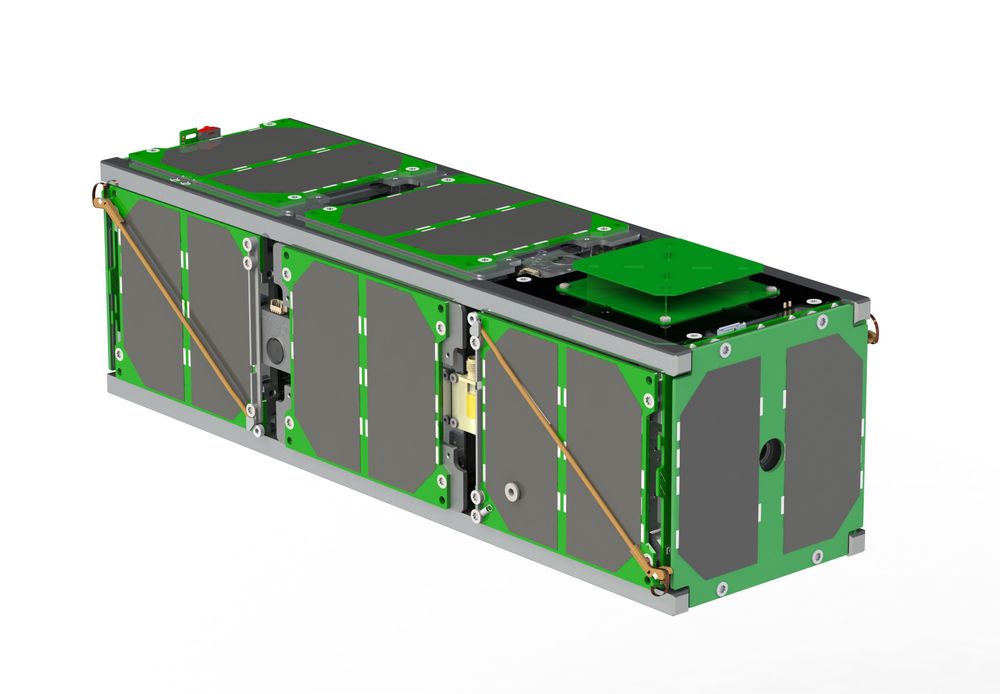
Gallery
1 61763U 24199AE  26283.94264702  .00092901  00000-0  10864-2 0  9995
2 61763  97.2742 162.6522 0003465 166.8907 193.2442 15.61267092155594

Mean elements of every TLE set over the past 365 days, plotted against the epoch of the set. Each source is its own line; click it in the legend to hide it. A jump in altitude is a manoeuvre or a bad set; lines drifting apart are a disagreement between sources. “TLE age” is how many hours have passed since the epoch of the source's freshest set, plotted against when the set reached us, on a logarithmic scale. A set the source repeats unchanged does not reset the age.
Each TLE set is propagated with SGP4 to the epoch of the next set from the same source and compared with it, plotted against the epoch of the next set; the tooltip shows how many hours ahead the prediction ran. The logarithmic scale shows the size of the divergence and the tooltip its sign: plus along-track means the prediction is ahead of the satellite. This is how well the sets agree, not the true error: the reference is a TLE too, off by about a kilometre. An outlier is a manoeuvre between sets. Sets more than a week apart are not compared.
| Time of closest approach, UTC | Object 1 | Object 2 | Distance, km | Speed, km/s | Max. probability |
|---|---|---|---|---|---|
| 2026-10-13 08:33:51 |
SIT-HSE
NORAD 61763 |
SL-12 R/B(AUX MOTOR)
NORAD 37143 |
2.515 | 15.08 | 3.5e-07 |
| 2026-10-13 16:27:10 |
SPACEVAN-001
NORAD 58295 |
SIT-HSE
NORAD 61763 |
4.032 | 14.13 | 1.3e-07 |
| 2026-10-13 17:13:17 |
SPACEVAN-001
NORAD 58295 |
SIT-HSE
NORAD 61763 |
3.995 | 14.17 | 1.4e-07 |
| 2026-10-15 22:23:29 |
SIT-HSE
NORAD 61763 |
COSMOS 2098
NORAD 20774 |
3.228 | 15.61 | 2.0e-07 |
Data: CelesTrak SOCRATES Plus, computed from TLEs of the public catalog. This is an estimate, not grounds for a manoeuvre: TLEs carry no covariance, and the maximum probability assumes a position error.