
UmKA-1
In orbit NORAD 57172 SDUV-9624-5611-1090-5908 Russia

Time in UTC
02:01
Next pass · МАН РС(Я) ГЕОСКАН УКВ
12.11 02:02
Scheduled · МАН РС(Я) ГЕОСКАН УКВ
3140
Observations over 30 days
87%
Successful observations
1M
Frames, latest 2026-11-12 00:34 UTC
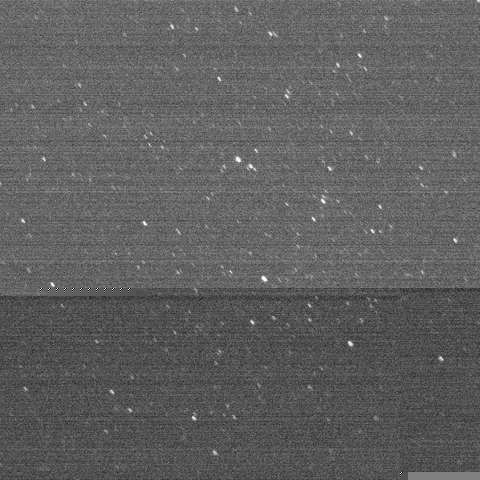
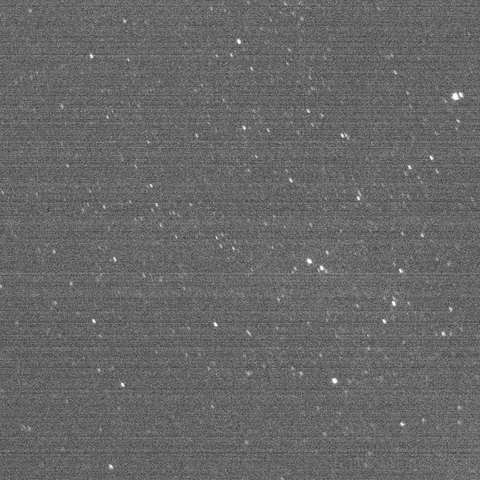
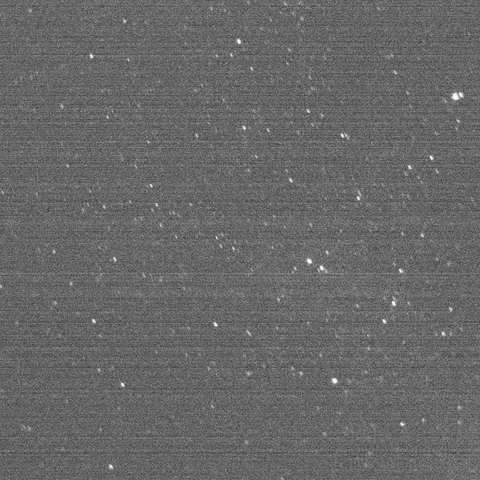
Equipped with the electro-optical system for educational astronomical purposes.
Satellite telescope UMKA-1 is a CubeSat supporting 3U application equipped with the electro-optical system for educational astronomical purposes. The main educational mission of this project is to provide satellite astronomical survey and observation of astronomical objects, constellations, star clusters, astronomical bodies, etc. in order to promote such scientific disciplines as astronomy and cosmology among young people. Moreover, this project will make it possible for secondary school students, university students and radio amateurs to get telemetering measurements and sky images from the Earthâs orbit. Additional goals of this project include making images of different orbital objects (e.g., images of orbital debris for its identification and its state assessment). As a result, secondary school ground receiving station operators, university ground receiving station operators and radio amateurs all over the world will be able to receive images of astronomical objects made by our satellite telescope from the Earthâs orbit using SDR receiver and our software. All project participants who will receive images of astronomical objects made by our satellite telescope UMKA and email us these images will be awarded a certificate. We also plan to send our own QSL cards to radio amateurs for receiving and decoding the telemetry data. The decoder and the information about the packet format will be freely accessible on our website. During this project satellite transmission schedule will be regularly updated on our website in order to inform radio amateurs about image transmissions. The UmKA-1 satellite was created by the team of the Center for Scientific Creativity 29 of the Podolsk School. The device is assembled on the basis of the OrbiCraft-Pro platform. The payload elements are the high-aperture Leptonar-20955K telescope and the PlayerOne Saturn-C SQR astronomical digital camera. Before placing them in the satellite body, the project participants took pictures of the Cygnus constellation, as well as the Andromeda nebula from Earth.
The satellite is in orbit








1 57172U 23091G   26315.60540295  .00006246  00000-0  27429-3 0  9990
2 57172  97.4865  13.7229 0011328 331.2827  28.7784 15.22237599186420

Mean elements of every TLE set over the past 365 days, plotted against the epoch of the set. Each source is its own line; click it in the legend to hide it. A jump in altitude is a manoeuvre or a bad set; lines drifting apart are a disagreement between sources. “TLE age” is how many hours have passed since the epoch of the source's freshest set, plotted against when the set reached us, on a logarithmic scale. A set the source repeats unchanged does not reset the age.
Each TLE set is propagated with SGP4 to the epoch of the next set from the same source and compared with it, plotted against the epoch of the next set; the tooltip shows how many hours ahead the prediction ran. The logarithmic scale shows the size of the divergence and the tooltip its sign: plus along-track means the prediction is ahead of the satellite. This is how well the sets agree, not the true error: the reference is a TLE too, off by about a kilometre. An outlier is a manoeuvre between sets. Sets more than a week apart are not compared.
| Time of closest approach, UTC | Object 1 | Object 2 | Distance, km | Speed, km/s | Max. probability |
|---|---|---|---|---|---|
| 2026-11-12 10:38:31 |
UMKA 1 (RS40S)
NORAD 57172 |
LEO EXPRESS 3
NORAD 66687 |
2.815 | 1.79 | 5.5e-07 |
| 2026-11-13 03:23:19 |
UMKA 1 (RS40S)
NORAD 57172 |
GEN1A-2
NORAD 69005 |
2.110 | 14.93 | 3.8e-07 |
| 2026-11-13 12:39:12 |
UMKA 1 (RS40S)
NORAD 57172 |
CZ-6A DEB
NORAD 55534 |
3.873 | 5.78 | 2.7e-07 |
| 2026-11-13 13:26:53 |
UMKA 1 (RS40S)
NORAD 57172 |
ELECTRON KICK STAGE R/B
NORAD 44636 |
4.767 | 13.93 | 1.0e-07 |
| 2026-11-13 15:24:31 |
UMKA 1 (RS40S)
NORAD 57172 |
COSMOS 2251 DEB
NORAD 37084 |
4.474 | 15.23 | 7.5e-08 |
| 2026-11-13 22:25:11 |
UMKA 1 (RS40S)
NORAD 57172 |
YAOGAN-39 04B
NORAD 58143 |
2.705 | 13.36 | 3.4e-07 |
| 2026-11-14 00:08:02 |
CELTEE 1
NORAD 41850 |
UMKA 1 (RS40S)
NORAD 57172 |
4.386 | 15.08 | 8.2e-08 |
| 2026-11-14 01:42:44 |
CELTEE 1
NORAD 41850 |
UMKA 1 (RS40S)
NORAD 57172 |
2.883 | 15.08 | 1.9e-07 |
| 2026-11-14 17:03:00 |
UMKA 1 (RS40S)
NORAD 57172 |
METEOR 2-5 DEB
NORAD 38275 |
4.921 | 14.65 | 7.7e-08 |
| 2026-11-15 02:48:05 |
UMKA 1 (RS40S)
NORAD 57172 |
YAOGAN-39 04C
NORAD 58145 |
3.257 | 13.09 | 2.4e-07 |
| 2026-11-16 10:37:54 |
UMKA 1 (RS40S)
NORAD 57172 |
GLOBAL-36
NORAD 100682 |
4.756 | 12.65 | 1.2e-07 |
| 2026-11-16 13:14:28 |
UMKA 1 (RS40S)
NORAD 57172 |
FLOCK 4H-26
NORAD 66729 |
4.773 | 1.68 | 1.9e-07 |
| 2026-11-17 03:51:18 |
UMKA 1 (RS40S)
NORAD 57172 |
ARIANE 44LP DEB
NORAD 33544 |
3.080 | 12.71 | 3.4e-07 |
| 2026-11-17 16:52:45 |
UMKA 1 (RS40S)
NORAD 57172 |
STRIX-3
NORAD 59224 |
3.627 | 9.67 | 2.7e-07 |
| 2026-11-17 17:49:02 |
UMKA 1 (RS40S)
NORAD 57172 |
YUNYAO-1 19
NORAD 58759 |
4.630 | 12.78 | 1.3e-07 |
Data: CelesTrak SOCRATES Plus, computed from TLEs of the public catalog. This is an estimate, not grounds for a manoeuvre: TLEs carry no covariance, and the maximum probability assumes a position error.