
OPS-SAT
Re-entered NORAD 44878 NRVR-2280-9172-8926-1963 ESA
2019
Launch
64
Observations all time
In-orbit test-bed by ESA for various on-board software applications and technologies.
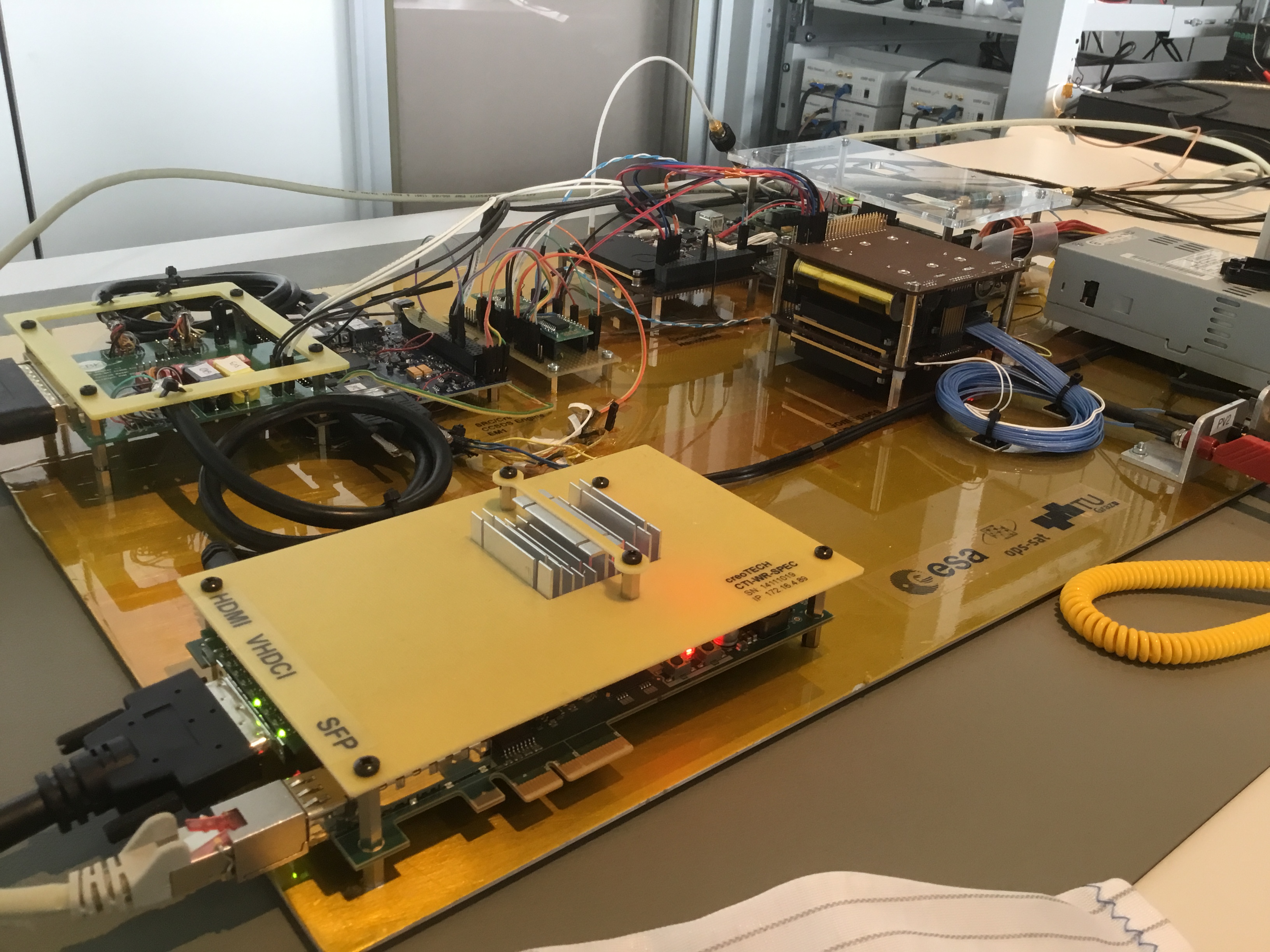
Demonstrate ground-breaking satellite and ground control software under real flight conditions. OPS-SAT will be an in-orbit test-bed for: On-board software applications Advanced communication protocols Compression techniques Demonstration of advanced software-defined radio concepts Optical communication from ground to space Experiments using cameras, attitude control, scheduling and autonomy Experiments with ground-based applications can also be hosted. A 3U CubeSat with deployable solar arrays. Demonstrating drastically improved mission control capabilities that will arise when satellites can fly more powerful on-board computers. Contains an experimental computer that is ten times more powerful than any current ESA spacecraft. OPS-SAT is an open, flying laboratory that will be available for in-orbit demonstration of revolutionary new control systems and software that would be too risky to trial on a "real" satellite.
The satellite burned up in the atmosphere
Gallery
1 44878U          24143.90000000  .00000000  00000-0 -77457-3 0    01
2 44878  97.4134 350.0806 0014531 134.7308 219.5616 16.53305383    00

Mean elements of every TLE set over the past 365 days, plotted against the epoch of the set. Each source is its own line; click it in the legend to hide it. A jump in altitude is a manoeuvre or a bad set; lines drifting apart are a disagreement between sources. “TLE age” is how many hours have passed since the epoch of the source's freshest set, plotted against when the set reached us, on a logarithmic scale. A set the source repeats unchanged does not reset the age.
Each TLE set is propagated with SGP4 to the epoch of the next set from the same source and compared with it, plotted against the epoch of the next set; the tooltip shows how many hours ahead the prediction ran. The logarithmic scale shows the size of the divergence and the tooltip its sign: plus along-track means the prediction is ahead of the satellite. This is how well the sets agree, not the true error: the reference is a TLE too, off by about a kilometre. An outlier is a manoeuvre between sets. Sets more than a week apart are not compared.